Welcome to the Chair of Systems Design

ETH Zurich

At the Chair of Systems Design, ETH Zurich, we perform interdisciplinary Complex Systems Research with a particular focus on the understanding and modeling of phenomena present in social, socio-technical and socio-economic systems. To do so we apply and develop quantitative methods from statistical physics, applied mathematics, computer science and beyond.

Climbing the society

The emergence of social elites has interested social scientists ever since Pareto’s observation of persistent inequalities in our societies. Inequality is acceptable if it results from differences of individuals in terms of their capabilities, but not if it results, in one way or another, from discrimination. The latter damages societies in terms of efficiency: it hampers social mobility by preventing the promotion of individuals to positions consistent with their capabilities.

more»

The Rise and Fall of R&D Networks

How do Research and Development networks evolve over time? Are there any universal patterns or their evolution is industry dependent? Is this evolution time dependent? Can we identify cyclic behavior or there is a monotonic trend? Find out more in our recent paper "The Rise and Fall of R&D Networks" which is now available on arXiv.

more»

Social resilience and the death of Friendster

What are the reasons that drive users away from Online Social Networks? Our latest study of Facebook, Myspace, Orkut, Livejournal and Friendster compares how the structure of their social network creates or diminishes their social resilience. Some media have reported on our analysis: Wired, and Technology Review.

more»

Quantifying the effects of social influence

Can we find rules governing the response to social influence that hold across intrinsically diverse individuals? Not only we can, but in certain situations these rules are amazingly simple. Have a look at Quantifying the effects of social influence  published in Scientific Reports.

more»

Organic Design of Massively Distributed Systems: A Complex Networks Perspective

How can we use methods and findings from network science in the engineering of distributed systems? We address this question in our recent article "Organic Design of Massively Distributed Systems: A Complex Networks Perspective" which has been published in "Informatik Spektrum"

more»

Paper published in Physical Review Letters

We proudly announce that our recent work "Betweenness preference: Quantifying correlations in the topological dynamics of temporal networks" has been accepted for publication in the journal Physical Review Letters.

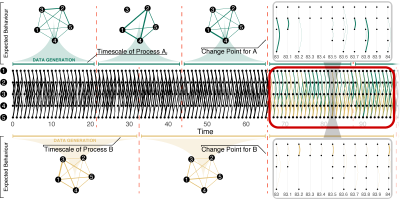
Going beyond the mere aggregate topology or activities of nodes in dynamic networks, in our paper we uncovered a so far unknown temporal-topological dimension of network dynamics. We further show that this new dimension crucially influences dynamical processes like for instance information diffusion or the spreading of diseases.

more»

The Rise and Fall of a Central Contributor: Dynamics of Social Organization and Performance in the Gentoo Community

Another of our recent works on social aspects of collaborative software engineering has just been accepted for the CHASE/ICSE 2013 Workshop. In this work, we study the bug handling community of the Gentoo linux distribution. We apply quantitative and qualitative methods to show how the rise and fall of a central contributor had lastingly effects on community cohesion and performance. Our methodology offers quantitative tools that can be applied to improve community management.

more»

Categorizing Bugs with Social Networks: A Case Study on Four Open Source Software Communities

We are happy to announce that our most recent work on social aspects of collaborative software engineering was accepted for the ICSE - Software Engineering in Practice track. In our work, we demonstrate how a reporting user's centrality in the collaboration networks of OSS communities can be used to automatically triage bug reports. 


more»

A Quantitative Study of Social Organisation in Open Source Software Communities

How do the collaboration structures of different Open Source Software communities differ and evolve over time? We quantitatively address this question in our recent article "A Quantitative Study of Social Organisation in Open Source Software Communities" which has been published in the Open Access Series in Informatics. 

more»

Upcoming talks at ICSE 2013 - San Francisco USA

We would like to announce two talks being presented at the International Conference on Software Engineering - ICSE - 2013, talking place in San Francisco USA. 

more»

Launch of COST Action "Analyzing the dynamics of information and knowledge landscapes - KNOWeSCAPE"

On April 26 2013, the COST Action TD1210 "Analyzing the dynamics of information and knowledge landscapes - KNOWeSCAPE" has officially been launched. One of the main objectives of the COST TD1210 action is to apply methods and abstractions developed in statistical physics, mathematics, and computer science to improve our understanding of knowledge spaces and the knowledge ordering processes applied to them. To this end, the action creates an interdisciplinary forum involving experts from library and information science, mathematics, physics, social sciences, communication design, economics and computer science.

The Swiss chapter of COST TD1210 will be coordinated by Prof. Dr. Dr. Frank Schweitzer (ETH Zürich, national coordinator) and Prof. Dr. Karl Aberer (EPFL Lausanne, national vice-coordinator). More information about the COST action as well as the Swiss chapter can be found on our dedicated project page.

more»

NetSci Satellite: Dynamic Information and Communication Networks

We kindly invite you to submit your contribution to the NetSci satellite workshop "Dynamic Information and Communication Networks", which will be held in Kopenhagen, Denmark on June 3rd 2013. The satellite will address novel applications of (dynamic) network theory in the modeling and analysis of information and communication network. This unique event aims at bringing together well-known researchers from the complex networks, computer science and information science communities. The workshop will be co-organized by Prof. Dr. Maarten van Steen, Prof. Dr. Yamir Moreno and Prof. Dr. Dr. Frank Schweitzer. More information can be found on the workshop's website.

more»

SG in Social Media